Of Merchants & Men – A Freewheeling Flaneuring Podcast With TimeLine London
My dear friend Dr Geoff Browell and his team, Tam McDonald, Christopher Winn, and Mark Mason, had the courage to ask me to hold forth on an eclectic and personal view of London’s history. Here is the resulting 53 minutes of sauntering sagacity, peripatetic pomposity, or perhaps freewheeling flaneuring.
In a special edition of the Timetable London podcast, hosted by Tam McDonald and Dr Geoff Browell, they discuss the historical and contemporary significance of London as a global financial hub. They explore the influence of Sir Thomas Gresham’s Royal Exchange and the Dutch on London’s financial system, highlighting the city’s rule of law, defence, access to talent, and open trade as key factors in its success. They also delve into the importance of common law in international finance, the role of the Lord Mayor in fostering prosperity and improving the built environment, and the unique culture of English pubs. The conversation concludes with reflections on London’s future and its enduring appeal.Coffee House in Cornhill Introduction
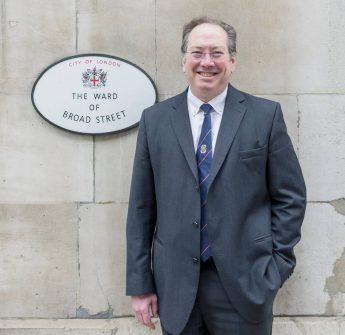
Tam McDonald introduces himself, the setting of the coffee house and pub in Cornhill, mentioning its historical significance and the diversity of company and discourse. and his co-host, Dr Geoff Browell, along with Executive Producer Christopher Winn and special guest Professor Michael Mainelli, Chairman of Z/Yen Group and the 695th Lord Mayor of London.
The coffee house is described as the site of London’s first coffee house, opened in 1652, and its global connections through a Greek to promote a Turkish product.
Geoff Browell welcomes Michael Mainelli, the 695th Lord Mayor of London, and asks about London’s success as a place of commerce and trade.
London’s Historical Importance and Sir Thomas Gresham
Michael Mainelli attributes London’s success to its reinterpretation of history, particularly the influence of Sir Thomas Gresham.
Gresham built the Royal Exchange in 1560, which was a significant financial centre pre-internet.
Mainelli explains the Dutch influence on London’s financial system, particularly the concept of a permanent trading facility inspired by the Dutch.
The Royal Exchange was a joint venture between the City of London Corporation and the Mercers, and it introduced the first exchange (bourse), and shopping mall to England in 1568 (officially opened by Queen Elizabeth I in 1571). Sir Thomas himself introduced double-entry bookkeeping to London from the Low Countries as well.
Dutch Influence & The Royal Society
Mainelli discusses the deep and often forgotten Dutch influence on London, including the wider Hanseatic League’s control over trade from Low Germans to strictly Netherlands influence of the 16th century.
The Royal Society (1660), which grew out of Gresham College, was influenced by the Dutch, particularly in the fields of mathematics and engineering.
The Great Fire of London (1666) stimulated the need for better measurement and surveying, leading to Robert Hooke’s role as the city surveyor.
The Monument at Pudding Lane, designed by Hooke and Wren, was intended to measure the parallax of stars but was hindered by vibrations and wind.
Common Law & International Finance
Mainelli explains why London is a significant centre for international wholesale finance, alongside Hong Kong, Singapore, Dubai, and Abu Dhabi.
Common law is favoured by business people due to its flexibility and evolutionary nature, which is crucial for international contracts.
Mainelli emphasizes the importance of defence and security, rule of law, access to talent, and open trade in London’s success.
The City of London Corporation is concerned about threats to the British judiciary and the rule of law, particularly during times of political instability.
The Role of the Lord Mayor & City Development
Mainelli describes the role of the Lord Mayor in creating prosperity, improving the built environment, and connecting people for deals.
The concept of ‘permeability’ in city planning, allowing pedestrians to walk through buildings, has been promoted by the City of London.
Mainelli highlights the importance of ‘groundage’, which encourages large chunks of ground floor space for pedestrian access.
The City of London has seen significant development, including new hotels, museums, and shopping areas, making it more accessible and attractive.
Thames Sailing Barges & London’s Historic Transport
The Thames’ tidal flow and the city’s sustainable transport system have been crucial for its development and success.
The Thames’ tidal flow allowed for efficient transportation, with sailing barges carrying significantly more cargo than ox carts – a 278 to 1 advantage in manual labour of Thames sailing barges to ox carts.
The rise of railways in the 19th century did not replace the sailing barges, which remained cost-efficient and low-impact.
The English experience of railways was different, focusing on getting people out of the city rather than freight transport.
The Special Nature of English Pubs
Mainelli explains the special nature of English pubs, which allow for easy interaction and community.
Pubs reflect the culture of the City, where people gather to work and socialise, unlike other parts of Europe where coffee houses held greater sway, despite coffee houses being extremely popular in London over the centuries – sometimes caffeine, a stimulant, lubricated conversation in a way alcohol, a depressant, never could; other times alcohol, a depressant, lubricated conversation in a way coffee, a stimulant, never could.
The intensity of the City of London, with its high working population density and punctuality, contributes to the unique pub culture.
Pubs serve as a place for people to connect and discuss, making them an integral part of London’s social and cultural fabric – the key test is “can you walk up to just about anybody and start a conversation”.
The Future of London & The City’s Resilience
Mainelli believes London will thrive into the future as long as people want it to, believe in it – a bit like Peter Pan and the fairies – citing its rich history and facilities.
The City of London has a long history of resilience, with significant growth and adaptation over the centuries.
Mainelli emphasizes the importance of maintaining the rule of law, common law, and international trade for London’s continued success.
Conclusion & Future Plans
Mainelli expresses his enjoyment of wandering around London and exploring its various neighbourhoods and pubs.
The City of London’s intense culture and connectivity make it a unique place, with a strong sense of community and tradition.
The podcast concludes with plans for future episodes, including discussions on flaneurs, coffee houses, and the secrets of the City of London.
Tam McDonald and Geoff Browell thank Michael Mainelli for his insights and contributions to the podcast.