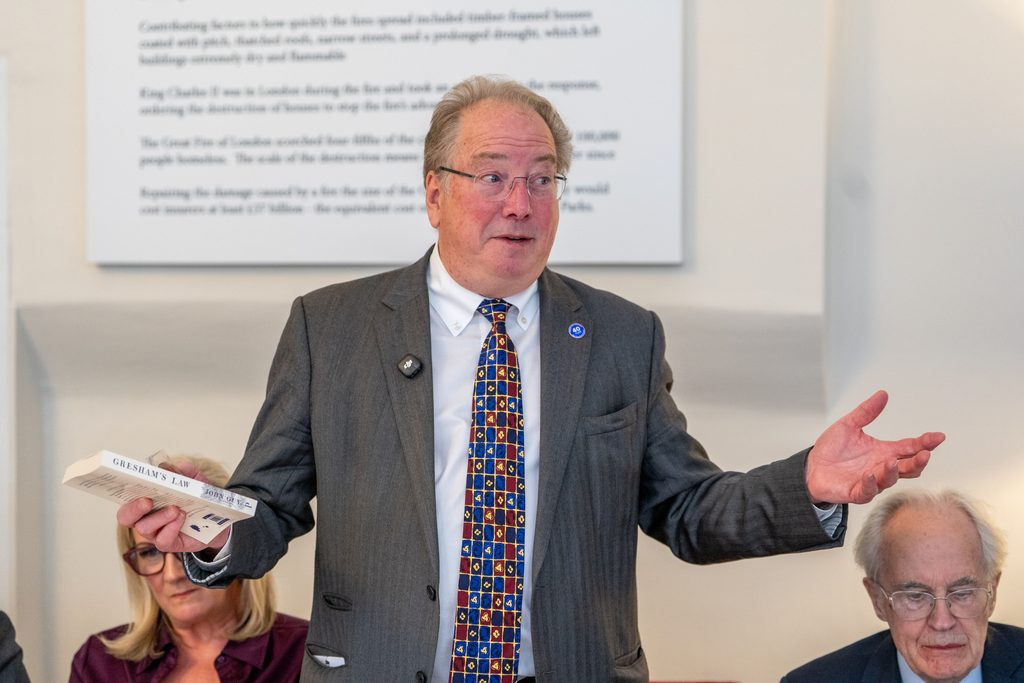

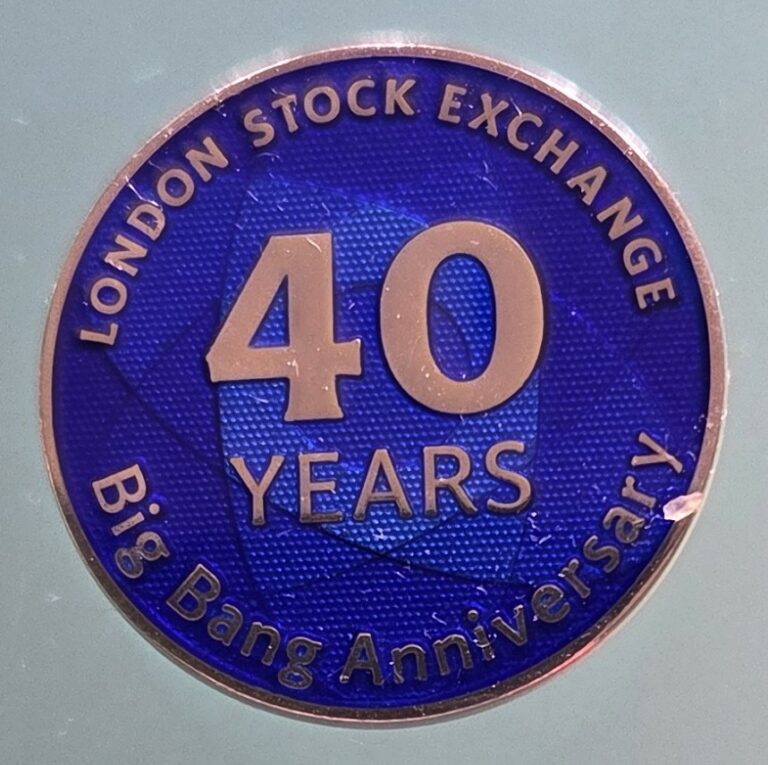
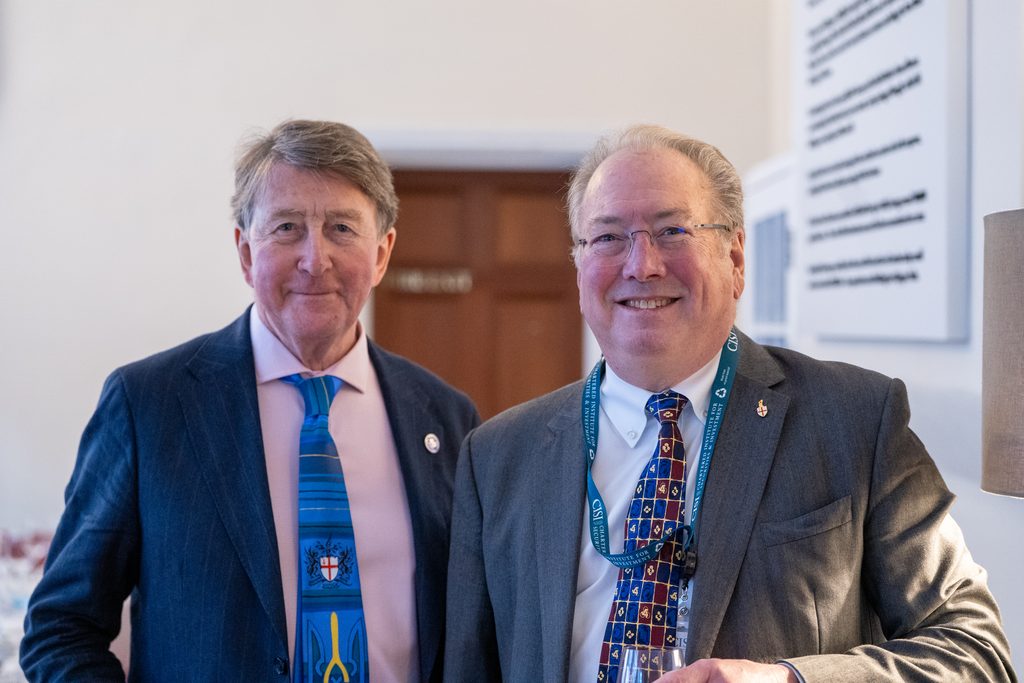
Forty years after Big Bang, on a Ruby Tuesday, I skipped the early morning event at the London Stock Exchange where nearly 200 people arose to ring the bell. However, my good friend George Littlejohn was undeterred from making sure I enjoyed myself chairing a proper City lunch at The Don on St Swithin’s Lane, just like the old days in the 1980’s. It really was enormous fun and we did indulge a bit. Remarks to:
Big Bang London: 40 Years On — 27 October 1986
13:15 to 13:30 – Welcome & Scene Setting by Professor Michael Mainelli
Welcome, everyone, and thank you for joining this special lunch to celebrate the 40th anniversary of the Big Bang in UK finance.
Four decades ago this very day, that Big Bang transformed the City – opening markets, unleashing innovation, and redefining what London could be. Today we honour that legacy, and the people and ideas that made it possible.
In 1979, Margaret Thatcher arrived in Downing Street determined to shake up Britain. One early move was abolishing exchange controls on 23 October 1979. In 1983, one story goes that she invited Sir Nicholas Goodison to Downing Street, seating him on a lowered sofa so his knees were round his ears as she served him tea and he couldn’t resist her blandishments about breaking up the City cartel. Big Bang followed on 27 October 1986: fixed commissions disappeared, brokers and jobbers could combine their functions, foreign ownership opened up, and screen-based trading began replacing the trading floor.
Why was this necessary? London was in danger of becoming a financial museum: splendid traditions, excellent lunches, and increasingly uncompetitive prices. New York’s equity market was six times larger by market capitalisation; Tokyo’s was twice London’s. The Stock Exchange had become a rather exclusive club, with rules designed for a different age. Only five major equity jobbing firms remained on the floor, down from dozens of jobbing firms and individual operations in earlier decades. The 1986 reforms were not simply deregulation: the Financial Services Act established a new regulatory framework.
Nigel Lawson, Chancellor of the Exchequer, put the case positively in March 1986: Big Bang was “essential if London is to compete successfully against New York and Tokyo”. But there were warnings. Sir Robert Armstrong, the Cabinet Secretary, feared “a bubble that will be pricked in a year or two”. History has given both perspectives some ammunition.
I was consulting at Messels, then part of Shearson Lehman American Express, as this transformation unfolded. We witnessed the arrival of international capital, new technology, and a rather different breed of City professional. I gave my team a rule that any Messels’ partner’s decision made after noon had to be reconfirmed the following morning. And any decision made at any time on a Friday had to be reconfirmed on the Monday. And last night the Old Dr Butler’s Head was empty at 17:30.
I also remember British Rail planners have a panic attack at the overcrowded, 125% of maximum capacity trains of 1986; everyone coming in at 09:00 and leaving at 17:00 with employment due to skyrocket. Passenger projections were catastrophic. After Big Bang, the new overseas owners insisted on earlier arrivals and later departures. British Rail went on to find other problems.
Only three years after Big Bang, when trying to explain London’s success despite selling what most thought of as its ‘crown jewels’, the Japanese coined the phrase “Wimbledon effect”: London might host the world’s financial champions without necessarily producing them. That is precisely what happened. Foreign firms bought British brokers, but London gained global reach, liquidity, jobs, and influence.
Big Bang was deregulation with a detonator. Big Bang opened the City to the world, transformed financial services, and made London a global powerhouse. It also proved that when you give bankers enough rope, they will eventually find a way to turn it into a financial instrument. It raised enduring questions about risk, regulation, and who picks up the pieces when ingenuity outruns judgement. And it was followed by Black Monday, not being in the Euro, the ERM, Asian Crisis, Global Financial Crisis, Liz Truss, and probably next week.
Forty years on, the lesson is not that markets should be left alone, or that they should be wrapped in cotton wool. It is that London prospers when it welcomes the world, embraces innovation, and remembers that a brighter future requires more than a bigger bang.
But this gathering is not only about looking back. It’s about Bigger, Better, Brighter Bangs ahead: a new wave of opportunity for Next Gen City professionals and the clients they serve. As technology, talent, and purpose reshape financial services once again, stakeholders must come together to build a more dynamic, inclusive, and globally competitive City.
Before we start dining at The Don – we are delighted to welcome in particular Bernie Till, veteran British financial operations executive who spent decades shaping modern exchange structures in London. He spent 24 years at London Stock Exchange, straddling Big Bang and serving as Head of Settlement Transition. He later became the Chief Operating Officer of EuroCCP and Vice President at the DCC. Even more delighted to hear Bernie’s providing the briefest of many addresses today by not speaking.
Paul Conn and Paul Matthews, along with George Littlejohn, have invited all of us with a simple request that we kindly consider a discretionary donation to the Lord Mayor’s Appeal. As they have donated this meal to you, and you can work out the likely cost, if the 35 or so of us here just multiply that by 10 we can raise an easy £35k. [general nervous murmurs ensue] So enjoy the main course and after that we will have the ghosts of Big Bang Past, Present, and Future address us before we hold an open discussion.
[AFTER MAIN COURSE]
13:30 – 13:40 Big Bang – Past
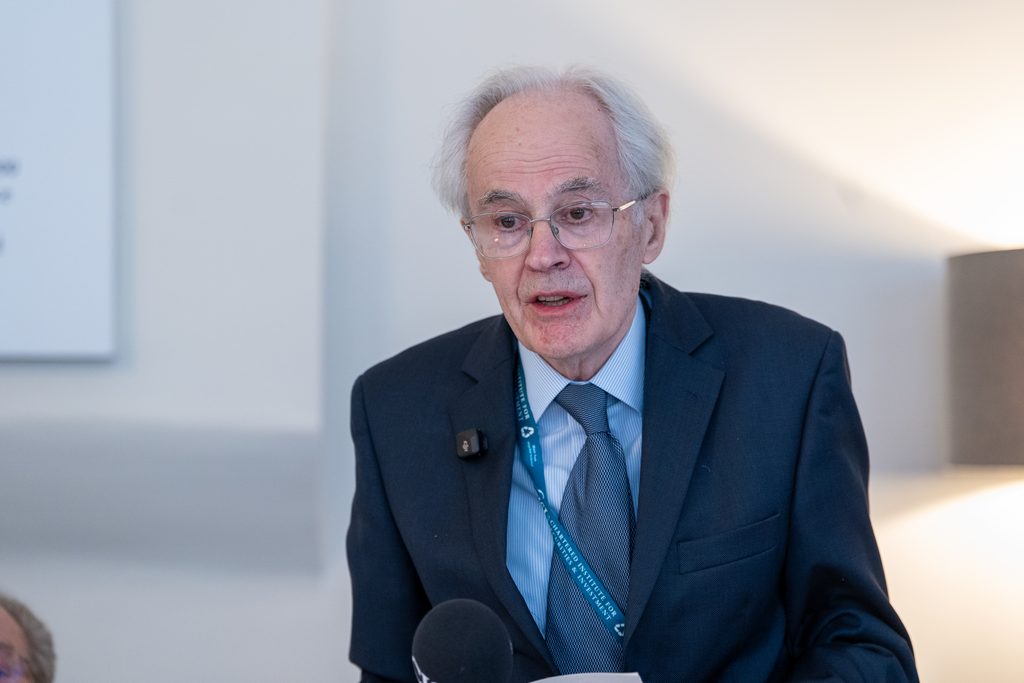
Scott Dobbie joined the Edinburgh stockbroking firm Wood Mackenzie in 1972, becoming managing partner by 1982. Following its acquisition by NatWest Bank Group in 1988, he served as Managing Director and Chairman of NatWest Securities. He later served as a senior advisor to Deutsche Bank. He was Chairman of CRESTCo 1996-2001 and of the then Securities & Investment Institute as it transformed itself from a UK body with a few thousand members to a truly global force with around 60,000 today.
13:40 Michael Cole-Fontayn thanks Scott Dobbie
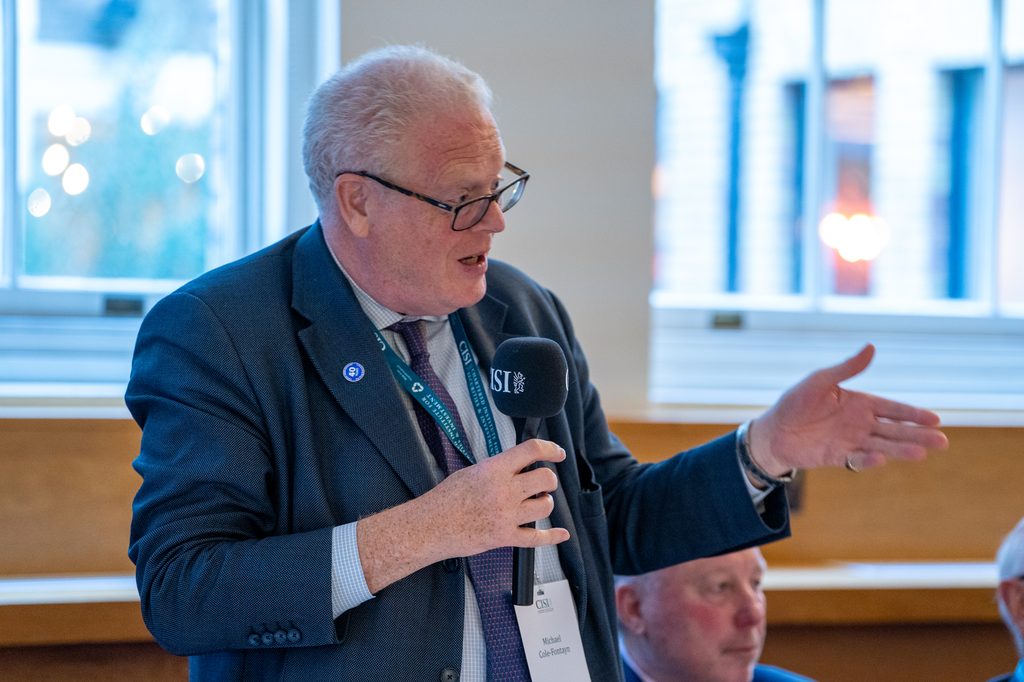
Michael Cole-Fontayn is a prominent financial services leader who serves as the Chair of the International Business and Diplomatic Exchange (IBDE) and the Chartered Institute for Securities & Investment (CISI). Prior to building his extensive portfolio of advisory and non-executive board roles, he spent 35 years at BNY Mellon, concluding his tenure as the Chairman of the Europe, Middle East, and Africa (EMEA) region.
13:45 – 13:55 Big Bang – Present
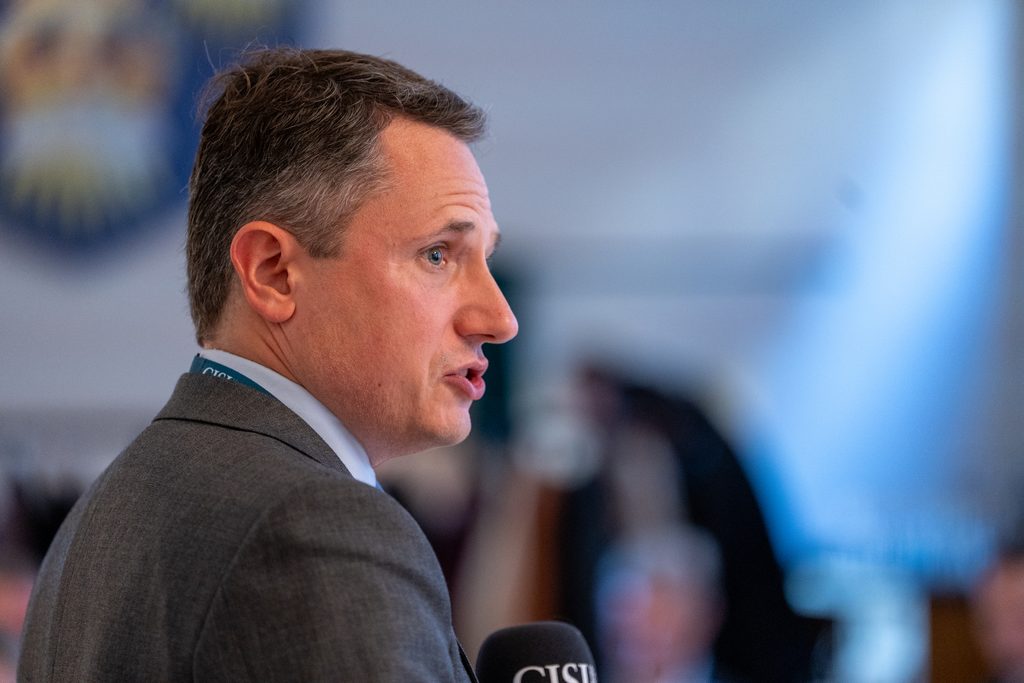
Charlie Walker joined LSE in 2018 to lead the Equity Primary Markets business before becoming Deputy CEO and joining the Board of the London Stock Exchange in 2023. During this time, he has been responsible for the Equity, Fixed Income, Funds and ETF Primary Markets businesses, its Trading and Hosting and Connectivity services and deputising for the CEO across the other aspects of running the Exchange. He brings to the business, in the words of Dame Julia Hoggett (who sends her best wishes to us today) “a passion for ensuring that our markets provide companies with efficient access to capital across their lifecycle.”
13:55 – 14:05 Big Bang – Future
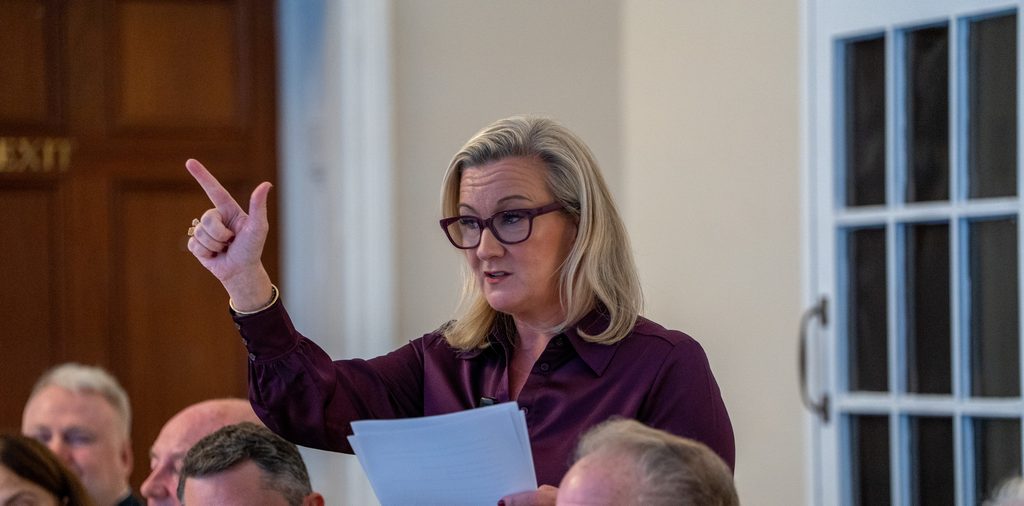
Stacey Parsons is Managing Director of Retail Book. She is an award‑winning senior leader in UK retail capital markets, recognised for shaping national policy, modernising primary‑market infrastructure, and championing broader public participation in the UK’s financial system. Her career combines deep expertise in Retail Fixed Income with strategic engagement across HM Treasury, HM Government, Bank of England, Debt Management Office, FCA and the London Stock Exchange. And she has just been appointed to a powerful new role at the Worshipful Company of International Bankers, of which she is a Liverywoman, heading its policy group.
14:05 – 14:40 – General Discussion
There were lively and short contributions from well over 25 of the attendees, yes over 25 in 35 minutes, and yes including Bernie Till. It was fun and engaging with much merriment and toasting. There were also fond memories of characters not there, such as Jack Wigglesworth, or the late great Brian Winterflood. Laughter and tears in rapid fire and rapid succession. I loved it. I cried a bit, well inside anyway.
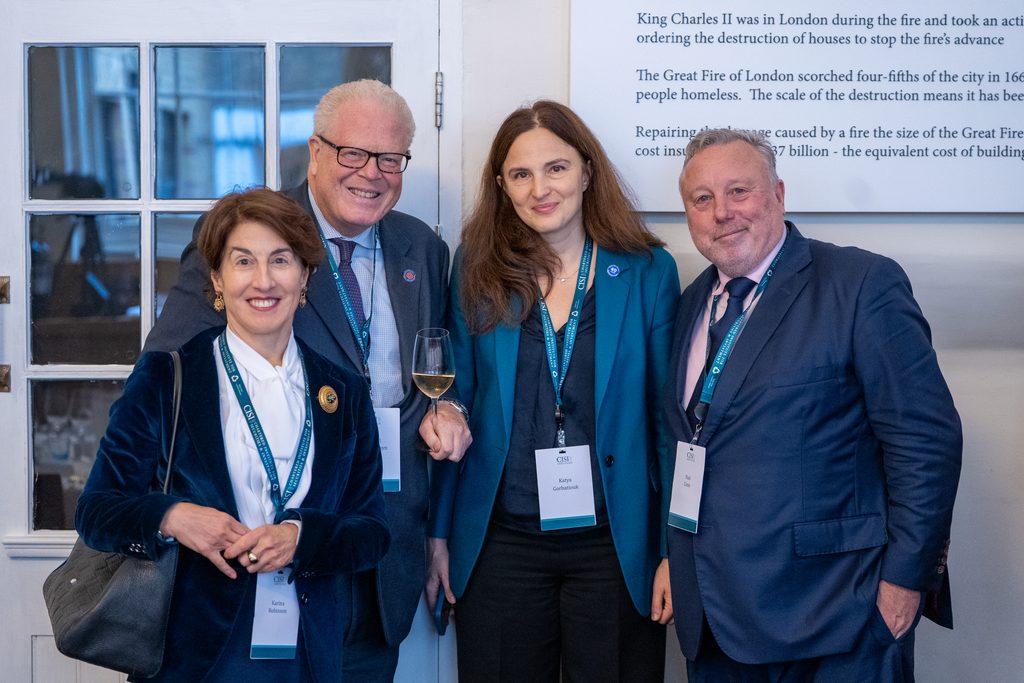
14:40 – 14:45 – Closing Remarks
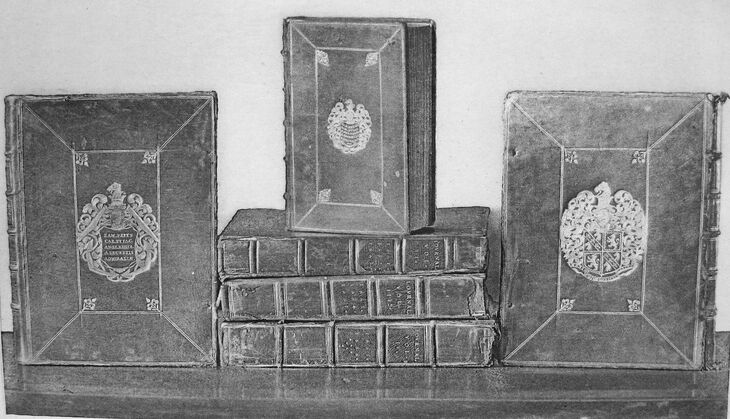
Well, we’ve had a rollicking discussion. There’s a promotional line on tube posters for the new Johnny Depp interpretation of Dickens’s “A Christmas Carol” called “Ebenezer”. It goes “Ever been ghosted three times in one night?” We’ve been ghosted about thirty times this afternoon. I can’t summarise so many contributions, but I do think there was a theme emerging. Scott gave us history, Charlie spoke about LSE’s plans to incorporate more history, and Stacey emphasised the need to tell our story if we want London to remain pre-eminent in finance and technology. Brian Winterflood and I had long talked about a Museum of the Exchange, equally I’m supporting a group for an Insurance Museum, currently exhibiting on the Great Fire of London within the Bank of England Museum.
Your story is everything. The theme of the musical Hamilton is at one level very relevant to us, it’s about central banking. At the human level, the emotional level, the theme is about legacy, concluding with a song entitled – “Who Lives, Who Dies, Who Tells Your Story?”.
We claim that the City is misunderstood [more musical references, this time “Gee, Officer Krupke” from West Side Story]. But if you’re an interested teenager, anxious to see if the City is for you, the only venue explaining the work we do today is the Bank of England Museum, central banking. There’s no museum of banking, insurance, shipping, law, asset management, or foreign exchange. Better yet, a museum of finance. No wonder we’re misunderstood. We done a few things, bringing out Commerce & Finance walks on our markets, banking, insurance, and shipping, but what about widespread information booths or displays, what about street furniture telling tales, what about reliable poster boards on the corners of buildings explaining what’s going on inside (“… in this building 1,000 lawyers work on international business in x sectors and y jurisdictions…”)? If we truly believe in our Ruby Slippers, that there’s no place like markets, then we need to sell them, because society seems to pursue many non-optimal alternative approaches from regulation to taxation.
Past, present, and future co-exist. Stories are not legacy alone, they shape contemporary decisions, they set out a vision for the future. Today we all agreed on the need to own, sharpen, and fiercely project our story; to communicate our journey with maximum impact; to share what we did, why we matter, and how we can help solve the problems of the future. To close, I sought to end on something approximating grandiloquent literature, but all I got was this limerick:
There once was a City so grand,
Whose rules were too tight to withstand.
Then Maggie’s Big Bang
Made the dealing floors clang,
And London took over the lands!
Thank you. And I look forward to seeing you all at our Golden Jubilee in ten years. Godspeed.