
Remarks to: The Worshipful Company of Poulters.
A Poulter’s Thanksgiving
Thursday, 26 November 2026, Armourers’ Hall
Master, Wardens, Visiting Masters, Distinguished Guests, Liverymen, Ladies & Gentlemen:
People celebrate harvest festivals all round the northern hemisphere this time of year. Thanksgiving is more. It is a harvest festival where participants give thanks for the wonders of life.
On the fourth Thursday in November, Americans commemorate a Massachusetts meal of salvation from 1621. English colonists (Pilgrims) and the Wampanoag people, including their leader Massasoit, shared a three-day autumn thanksgiving feast after the colonists survived their first gruelling winter with the help of the Indians.
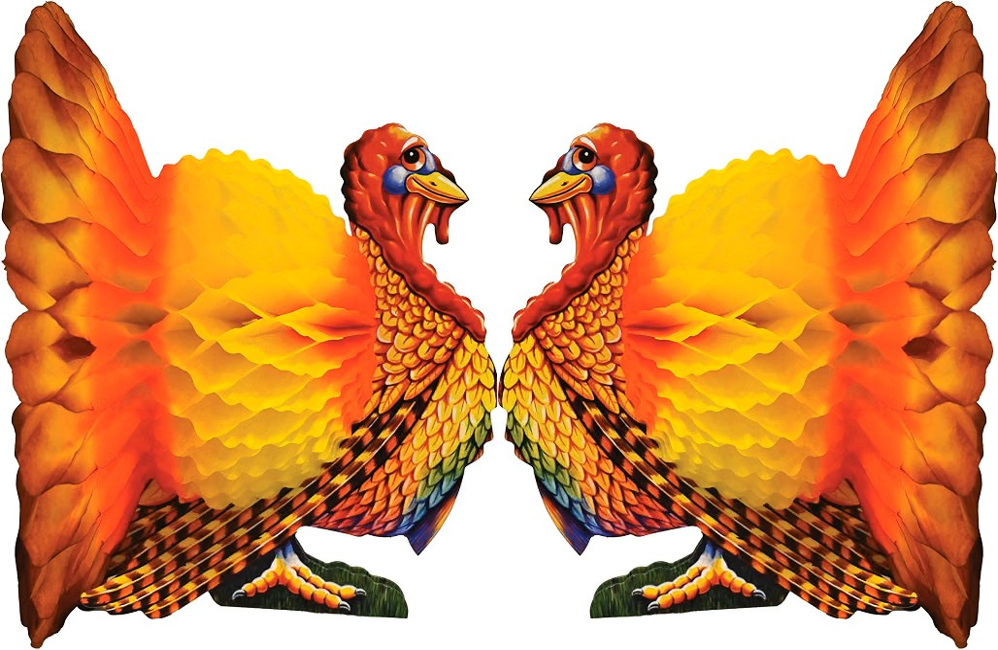
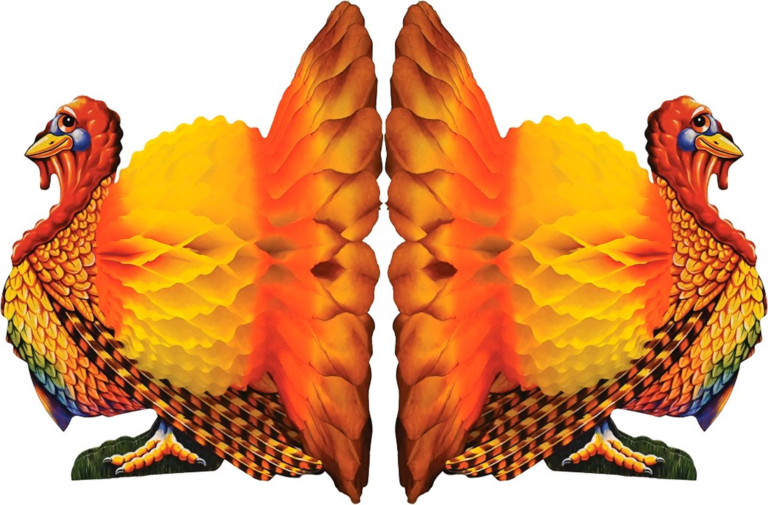
Hopefully you noticed the Wampanoag green bean casserole from the Cook & Butler, and Peter Chand’s lovely Thanksgiving decoration. And I’m delighted to present Master Terry Thurley with a traditional tissue turkey centerpiece
Yet the earliest recorded European thanksgiving ceremony in North America dates to 22 July 1578, when English explorer Martin Frobisher and his crew held a formal service in present-day Nunavut to give thanks for surviving a treacherous navigation of icebergs. One transatlantic joke holds that English Thanksgiving would be better held on the 4th of July.
Your Master & Clerk probably invited me today to share large sections from the book “Race to Thanksgiving”, my forthcoming 1,900 page bestseller and feature film trilogy; so it’s time to talk turkey – a potted holiday sequence runs – George Washington proclaims the holiday in 1789, Abraham Lincolm make Thanksgiving the last Thursday in November in 1863. Canada proclaims it a national holiday in 1879, and fixes it as the second Monday in October in 1957.
Both countries settle on birds as the traditional main course, which is probably why foul jokes are faux pas at Thanksgiving dinners. As for fowl, when it comes to brainpower, turkeys don’t have a leg to stand on. Turkeys of course are vegan, which is why at holiday time they encourage us to ‘give peas a chance’. Canadian turkeys are four weeks dimmer than American turkeys, and American turkeys in turn four weeks dimmer than English Christmas turkeys. So what does a smart surviving turkey turn into on 26 December? A lucky duck of course.
As merchants, Poulters must adore American President Franklin Delano Roosevelt. During the Great Recession Franklin moved the Thanksgiving holiday earlier by one week, to the second-to-last Thursday in November in order to help boost the economy, though public backlash was so strong the day was almost renamed Franks-giving.
At this time of year, turkeys can run exceptionally fast. This morning a Maserati driver on the motorway spotted a three-legged turkey overtaking him in the rear-view mirror. As the turkey passed, he revved up, racing off the motorway and down twisting country lanes right into a screeching halt in the middle of a farmyard, with an old farmer in a torn Barbour coat staring at him quizzically.
Nervously the driver lamely explained that the object of his high-speed pursuit was a three-legged turkey.
“That’s right”, said the farmer, “we raise ‘em here.”
“Why?”
“Well ya see, I like a leg, and my wife, she likes a leg, and my boy, well he likes leg.”
“What do they taste like?”
“I don’t rightly know, never caught one.”
Moving on from po-ultry in motion, we had a great event at Mansion House in November 2023 when Benjamin and Georgina Browning, together with their three lovely children, gave Elisabeth and me a gargantuan turkey. At 18 kg, but only two legs, we called him Eggmont. In a welcome break from White House tradition, Eggmont arrived oven ready. As the Browning’s explained, to us, he was simply the baste.
Did you know that the first frozen TV dinners came about because of a turkey surplus? In 1953, Swanson had approximately 260 tons of leftover turkey. Rather than waste it, the company developed the famous aluminium-tray frozen meal. The next year, 1954, Swanson sold ten million pounds of frozen turkey – another triumph of poultry over logistics.
In America, each family traditionally takes in and feeds some less well-off souls. Elisabeth and I appreciate you keeping up that tradition. Now, we’re not being churlish, but Elisabeth and I happen to be partial to duck. Elisabeth implored me not to share any of my ‘flown duck’ stories, for another day; yet, we struggle to find the perfect duck in the UK. Elisabeth is fond of German ducks. At one point, Elisabeth’s mother was dutifully smuggling homemade, partially-cooked, frozen ducks through Heathrow in her hand luggage on every visit. As you can imagine, there was much ado about stuffing.
In desperation I once tried barbequing a whole duck, but forgot to put a drip pan underneath – family legend incorrectly records a fully-fledged, perpetual-motion fire despite turning off the gas – dripping fat kept the flames going for nearly three hours. Even Warner Bros Daffy Duck looked better after an ACME disaster. I tried to explain to Elisabeth that whereas a smoking gun is evidence of a crime, a smoking duck is evidence of a very good chef. She remains unconvinced.
Now, I’m quite partial to duck from China. Pekin duck is a Chinese breed, developed over centuries, and brought to the United States in 1873 forming the core US breeding stock. Imagine my surprise in Taiwan last month. Overhearing a conversation about 烤鸭 kǎoyā, roast duck, I was informed that the finest Peking ducks in the world are from Cherry Valley Farms in Grimsby. In one of those strange-tangled-travel-tale-twists, just an hour later that very conversation was followed by a magnificent banquet featuring, as the highlight of a meal of many delicacies, reverences and toasts to the Cherry Valley duck we ate.
So, in a curious way, Chinese duck went to America, became an American success, and flew on to Britain to become a global export business, without peeking back.
Beyond turkey and duck, the Poulters think they have it all covered, geese, chicken, pheasant, partridge, quail, grouse, woodcock, squab, swan, or guinea fowl. Further reasons to be thankful include the fact that might not have been poultry. In 1926, President Calvin Coolidge was presented with a live raccoon for Thanksgiving. If you’ve ever tasted raccoon, rejoice that he named her Rebecca and made her a White House pet.
The 100th Macy’s Thanksgiving Day Parade in New York is one of America’s great annual spectacles. The famous giant balloons arrived in 1927. During our 2023 Lord Mayor’s Show, the Worshipful Company of Information Technologists helped bring a little of that magic to London with an augmented reality app that put giant virtual balloons above our floats. The Parade should be going on as we dine here in this magnificent hall, but apparently the parade has been postponed due to high winds so you can watch it on Saturday.
Poultry are a wonderful example of what the City does best: combining heritage with innovation, tradition with biotechnology, and occasionally making something appear that isn’t actually there. Which, come to think of it, is possibly a fairly good description of some City balance sheets. I shall finish with a little ole Thanksgiving verse from high school in the southern states:
May your stuffing be tasty,
May your turkey be plump.
May your potatoes n’ gravy have nary a lump,
May your yams be delicious,
May your pies take the prize,
May your Thanksgiving dinner stay off your thighs.
So, Master, Wardens, and fellow guests, let us give thanks. May your birds prosper, your businesses flourish, your dinners be delicious, and after all this food be assured – none of us will ever catch a three-legged turkey. Above all, let us be thankful for the fellowship of this wonderful Company.
Happy Thanksgiving!
Now, would all who are able to, rise, and would all join me in a toast to “The Worshipful Company of Poulters, coupled with the name of the Master, Terry Thurley; may it flourish root & branch forever”.