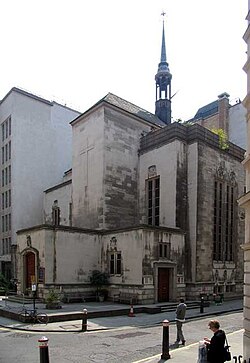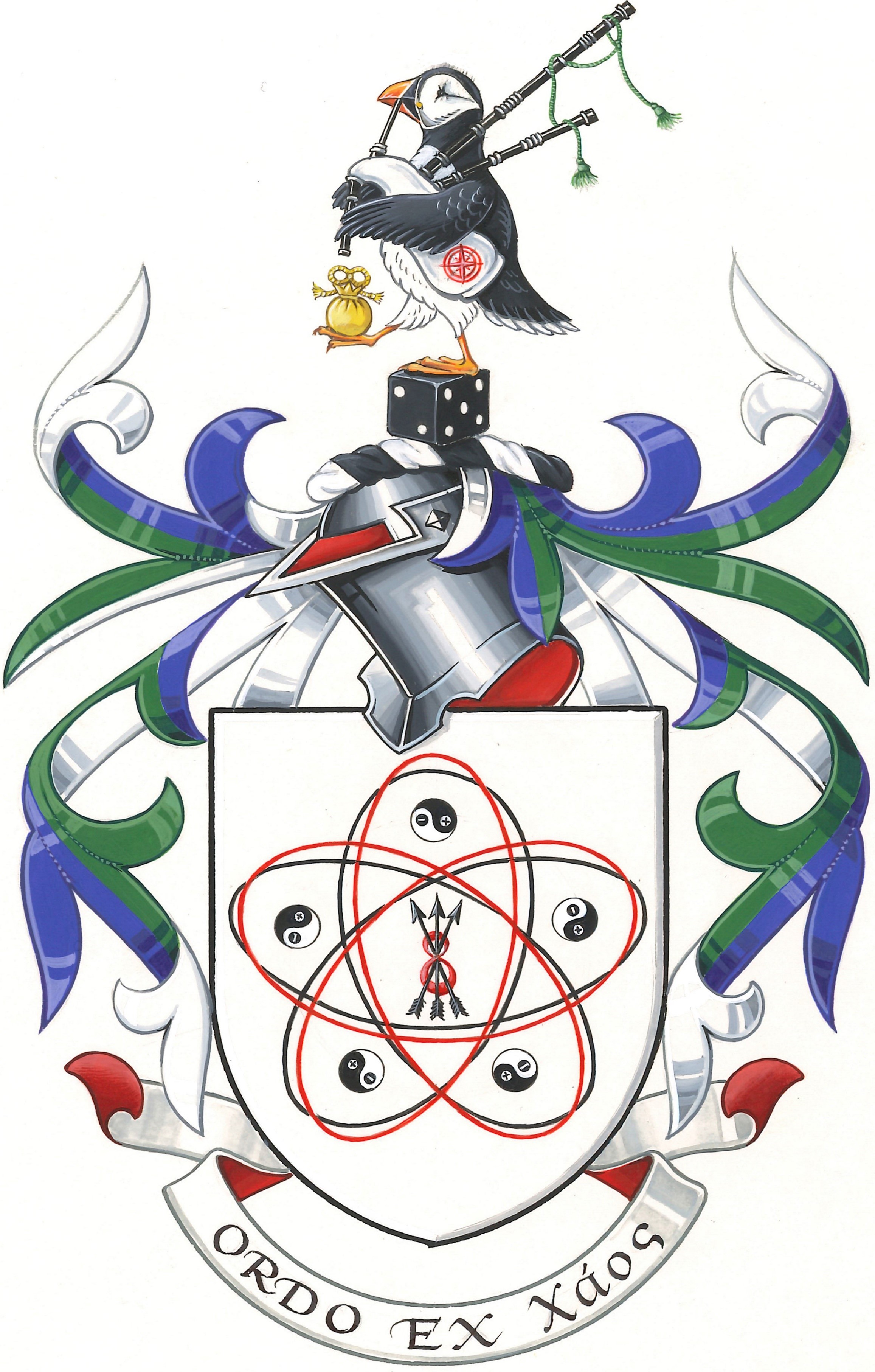


Remarks to: the Anglo-Netherlands Society.
Reason, Tolerance, and the Anglo-Dutch Future
Professor Michael Mainelli
Anglo-Netherlands Society Annual Dinner, Friday, 13 November 2026. Reform Club, London
Chairman, Excellency, ladies and gentlemen—goedenavond.
Folly’s Entourage At The Reform Club
It is Friday the thirteenth, we are dining at the Reform Club, and I am foolish enough to speak after dinner on “Erasmus’s Heirs: In Praise of Folly, In Pursuit of Friendship: Reason, Tolerance, and the Anglo-Dutch Future”. Erasmus wrote that the Goddess Folly arrives with an entourage of nine attendants, seven nymphs and two gods: self-Love, Flattery, Oblivion, Laziness, Pleasure, Madness, Wantonness, Intemperance, and Dead Sleep.
Looking around this splendid room tonight, I see Pleasure, Intemperance, and Flattery in abundance. Perhaps speaking after dinner I’m folly number nine, Nigretos Hypnos, Dead Sleep—so I shall promise to deliver sleep promptly.
My thanks to Dick van den Broek and Paul Dimond for giving the opportunity to share some thoughts with you tonight.
Our two nations have been connected for centuries by trade, scholarship, migration, finance, and a shared ability to make a virtue of being awkward. We have perfected the art of being neighbours across a narrow stretch of water while occasionally battling about in boats.
Tonight, I want to make the case for Anglo-Dutch friendship origins through a Dutchman who directed both our histories: Desiderius Erasmus of Rotterdam (1466/1469?-1536), born in the fifteenth century, he died in 1536. He wasn’t entirely sure what year he was born—1466 or 1469 – which is a wonderfully questioning, humanist way for a scholar to begin. And I want to leave you with one simple, even simplistic, refrain—four words to take home tonight: “Question kings, challenge ideas”.
Erasmus was a humanist, theologian, and philosopher; and through his writings and translations, one of the most influential scholars of the Northern Renaissance. He is relevant even today. This wonderful Reform Club library holds his complete collection over there in the other alcove.
The Reform Club suits Erasmus. Contemporaries said he laid the egg that Luther hatched, yet he had no wish to die for the truth. He was firmly in favour of reform—but always just popping out when the vote was called. In an age of religious fanatics, Erasmus preferred persuasion to persecution, noting wryly that he was no martyr material; he didn’t burn well on a stake.
Rotterdam Is Everywhere
When in England, he wasn’t a marble saint either. A prickly, slightly roguish, often impoverished intellectual; he was a suck-up. Consider his first visit in 1499. Thomas More took him to Eltham Palace to meet the royal children. At dinner, eight-year-old Prince Henry sent a note demanding a literary tribute. Erasmus had brought nothing. He went home and dashed off a fawning, servile Latin poem in three days, for a client who later became notorious for how he shortened his advisers.
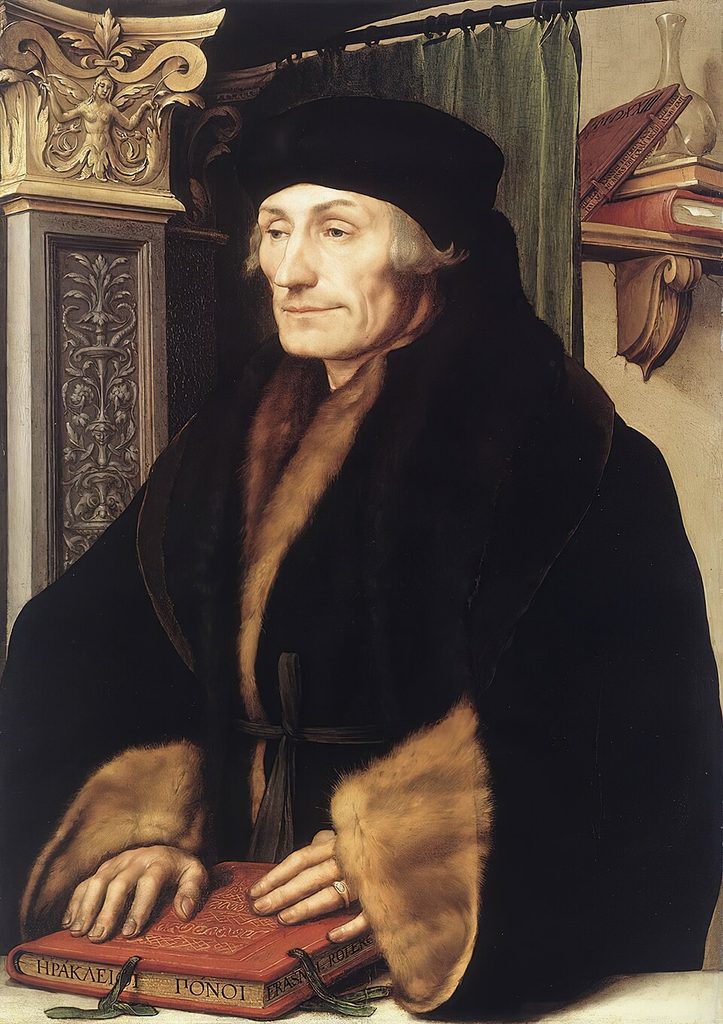
And people sucked up to him. The Beautiful South song goes ‘Rotterdam (Or Anywhere)’ – half of London’s skyline looks like a Rotterdam export, the other half is staffed by Erasmus University graduates. Erasmus’s hometown fame means directions in Rotterdam run like this: “Just cross Erasmus Bridge, walk past Erasmus Medical Centre, take the metro toward Erasmus University, and meet me at the statue of Erasmus. If you get lost, just follow the shipping containers”.
Erasmus also had a rogue’s eye for hospitality—and a sharp nose for English hygiene. He loathed English floors: rushes strewn over clay, the bottom layer left untouched for twenty years he asserted, preserving spittle, beer, and “everything that is nasty”. Hygiene sometimes separates our cultures even today.
And being Dutch he never forgot his wallet. Leaving via Dover in January 1500, customs officials impounded nearly all his savings, which he was foolishly carrying in gold coin. He should have bought a bill of exchange—which may be how City financial services began: an academic mugged by customs, and a London merchant saying, “You really should have come to us.”
I happen to be Alderman for Broad Street Ward in the City of London, home to the Dutch community in London, where we continue to celebrate Koningsdag, but Erasmus got there five centuries first. In fact, Ds Bertjaan van de Lagemaat, Predikant of the Dutch Church, here tonight, showed my gang of Anarchic Archivists some volumes in the Church library owned by Erasmus himself.
Local history records that in 1513 he complained bitterly about the quality of the wine—and walked out without paying his bill. Run the numbers: compound an unpaid thirteen-pound wine bill—an appropriate figure for Friday the thirteenth—at five per cent for 513 years, and you arrive at roughly the GDP of the Netherlands. Perhaps this club should put down a bottle of claret for 2539.
My own Dutch connections include Queen Beatrix’s coronation; work with Shell, ING, Neckermann NV, and others; officiating at a viva in Tilburg; making the Netherlands of my 25 overseas visits as Lord Mayor in a re-energising of City and EU connections; a daughter who took one degree at Twente, the other at Delft and spent nine years living in the Netherlands, and loving it; and a forlorn Duolingo lockdown project learning either Dutch or Flemish – I ask you, which language uses phrases such as:
“Ik praat niet tegen jou; Ik praat tegen de neushoorn.”
“I’m not talking to you; I’m talking to the rhinoceros.”
“Snelle dieren en langzame kinderen.”
“Fast animals and slow children.”
Or the terrifying:
“De lichaamsdelen zitten allemaal op de goede plek.”
“The body parts are all in the right place.”
Flemish of course.
The Greeks Have Another Word For Spade
He could be rude. In 1509, staying at Thomas More’s house in Bucklersbury, Erasmus knocked out In Praise of Folly in about a week. The Greek title, Moriae Encomium, is a dual language pun on More’s own name – to praise folly is to praise More. So he thanked his host by calling him a fool, in print, and in Greek and Latin – rather awkwardly languages More well understood.
Yet out of this roguish wit came two nations bound by practical tolerance. In 1550, the twelve-year-old boy-king Edward VI—the City has had worse regulators—granted Dutch Protestant refugees the right to worship by their own rites and found their own church. Sixty years later, Leiden returned the favour, sheltering English dissenters—the Pilgrim Fathers—before returning them to London where the Predikant raised money to get rid of them, shipping them to America on the Mayflower. Each of us has been the other’s harbour when the wind turned. Tolerance is one trade in which both sides claim a surplus.
There are verbal clashes of tolerance. The Dutch say what they mean. The English often don’t mean what they say. Take, “I’ll bear that in mind” – where the English mean “no” the Dutch hear a binding contract.
Tonight’s biggest trivia take home is that our bluntest English idiom is an Erasmian verbal clash: Erasmus mistranslated an ancient Greek proverb “call a bowl a bowl” into Latin as “call a spade a spade”. A faithful translation into English means that for five hundred years we have been too polite to correct his Latin. Limericks arrive later, but Erasmus would have appreciated their wordplay, whimsy, and use of vernacular wit poking fun at human foibles, pomposity, and absurdity. Here’s my attempt at explaining his mistake:
When Erasmus translated the Greek,
His scholarship sprang quite a leak.
“Call a bowl a spade”,
Was the phrase that he made,
Now we’re too polite to be frank when we speak!
The Anglo-Dutch Engine: How the Dutch Seeded Science and Liberalism
In the fifteenth and sixteenth centuries, the Low Countries were an anomaly in Europe: a decentralised, mercantile federation with high literacy, relative religious toleration, and the freest printing presses on the continent. While absolutist monarchies censored inconvenient ideas, Amsterdam and Leiden published them.
Free speech, open assembly, and uncensored publication. The Dutch possessed all three. The City of London, governed by a web of self-regulating trade guilds and municipal charters that limited executive power, possessed the first two—and imported publications from across the North Sea.
When the Dutch revolted against Spanish Habsburg rule in the sixteenth century, tens of thousands of Protestant artisans, printers, and scholars fled to the Austin Friars area. They brought more than weaving and draining techniques; they brought an egalitarian, contractual habit of mind. Later, when English dissenters and philosophers—including John Locke—needed shelter from Stuart absolutism, the traffic reversed, and Holland became their sanctuary.
Amsterdam and London discovered that prosperity depended on predictable rules rather than royal whim. This shared commercial culture gave birth to classical liberalism. Two nations learning to “question kings, challenge ideas” and abiding by Toleration & Free Inquiry; Property & Contract; Limited Government & Open Markets. Two small maritime nations developed the modern world’s economic operating system.
I should be careful about asking “what did the Dutch ever do for us” in front of this Society. We could start with a king, the Bank of England, the national debt, drained Fens, Huygens’s pendulum clock, the word “yacht,” and a taste for eels. I fear I’ll receive an itemised spreadsheet with a delivery timetable.
Disagreeing Disagreeably
Naturally, all this mutual generosity generated the Anglo-Dutch naval wars. In 1667, notably, the Dutch sailed up the Medway and towed away the flagship Royal Charles; her stern still sits proudly in the Rijksmuseum. Yet Erasmus warns us: “War is sweet to those who have not tried it.”
Here’s a wartime peculiarity from 1699. In between the third and fourth wars, Parliament made Billingsgate a free fish market—except for eels. Eels were reserved for Dutch boats. Legend has it in gratitude for feeding London after the Great Fire.
At the Dutch Church’s commemorative eel service in 2019, we had sermons on eels, four poets read lengthy odes to eels, a Frisian barge arrived with a hundred kilos of live eels, the minister blessed eels for half an hour, and then naturally everyone turned to the Alderman to sell them. Fortunately for London’s pride and English hygiene, Billingsgate market bought the eels the next day.
All was not strife. During this entire Restoration era Dutch boat builders were teaching the English how to do commercial vessels properly – for Elisabeth and my family, our Thames Sailing Barge design evolved from Dutch boat builders around 1700 modifying Dutch barge designs for the Thames estuary.
Yet another oddity is the supposed 335 year war from 1651 to 1986 over the Scilly Isles, a fifth war.
That 1699 agreement exemplifies diplomatic advice Erasmus borrowed from Cicero : “The most disadvantageous peace is better than the justest war.” So here is my treaty tonight: the Rijksmuseum keeps the stern of the Royal Charles; Broad Street Ward forgives the 1513 wine bill; nobody calculates the interest.
Don’t Think About Elephants
I’ll close by asking you to never, ever, think about elephants. In the parable of six blind men and an elephant, one blind man feels the trunk: a snake. Another the ear: a fan. The leg: a tree. The tusk: a spear. The flank: a wall. The tail: a rope. Each is certain what an elephant is, each is wrong, and in half the versions they come to blows—just as England and the Netherlands did four times. In nicer versions, the blind men compare notes over dinner and succeed in understanding the beast.
Pair that parable with an older proverb Erasmus popularized in Adages: In regione caecorum rex est luscus—“In the land of the blind, the one-eyed man is king.”
The lesson? Knowledge comes from open inquiry, freedom from arbitrary power, and progress from seeing things together. Question kings, challenge ideas.
That stereoscopic vision built modern science. Erasmus’s great cry was ad fontes—back to the sources. Don’t trust inherited dogma; check the text; use as many eyes as you can. Erasmus so inspired the Gresham family, like Thomas More, part of a circle Erasmian admiring Mercers, that Sir Thomas Gresham left his vast fortune to Gresham College and the “New Learning”. Gresham College was originally in Broad Street Ward, just over the road from the Dutch Church. And on 28 November 1660, twelve men dined following a Gresham lecture with Christopher Wren to found the Royal Society and promote natural philosophy. Their motto, Nullius in verba—“take nobody’s word for it”—means check everything out.
And the Dutch were right there: Christiaan Huygens became the Royal Society’s first foreign Fellow in 1663, and Antonie van Leeuwenhoek sent two hundred letters detailing microscopic worlds. Hooke checked Leeuwenhoek’s findings, and proved him right. Peer review, Anglo-Dutch style. Question kings, challenge ideas.
So Erasmus’s humanism spawned New Learning, creating Natural Philosophy and Liberalism, while making my Broad Street Ward the home of science. Not bad for a deadbeat philosopher who does a drinks runner.
Disagreeing Agreeably
Hand in hand with tolerance, though, the final ingredient for disagreeing agreeably is doubt. Paul Tillich and Søren Kierkegaard Søren Kierkegaard concluded that to have faith, one must also have doubt.
To have tolerance of other ideas and viewpoints, one must also have doubt – to accept the possibility that you are wrong, and the other person is right. Doubt opens the mind to new theories, new discoveries, and new solutions. The spirit of “I am not too sure, but I’m listening” runs through our Anglo-Dutch relations. By embracing tolerance and doubt, friends progress through disagreeing agreeably.
As we look ahead there are elephants to explore together. Artificial Intelligence, where everyone is holding a different part of the beast while confidently lecturing the rest; a focus of my 2024 visit to the European Space Agency in Noordwijk, Space Debris, which moves too fast to grab alone; and Green Finance, which is simply too big for any single country to wrestle alone.
Remember Folly’s golden rule – whoever thinks they hold the whole elephant is the biggest fool in the room. Employ the eyes of friends. From Erasmus to the Royal Society, the Anglo-Dutch relationship helped establish a tradition of questioning authority, testing ideas, and tolerating disagreement. Our future prosperity depends on continuing that tradition: combining perspectives, accepting doubt, and disagreeing agreeably.
Erasmus gave Folly the final word. In Praise of Folly, I give the final words to another limerick:
Said Folly, “I’m praised, and it’s Mo(o)re,
Who gave me a room, and the floor.
One eye sees a snake.
Two eyes make no mistake.
It’s an elephant. Pour me some more!”
Ladies and gentlemen, please be upstanding if you can, and would all join me in a toast to the Anglo-Netherlands Society: “Question kings, challenge ideas”. Proost!