Sir Thomas Gresham: Tudor, Trader, Shipper, Spy and the Ladies of Dulwich

What a most interesting talk to give. My dear friend, Robin Sherlock KCLJ MA, former Chief Commoner of the City of London Corporation, asked me to speak at the Ladies’ Dinner of The Dulwich Club where he has been Senior Steward the past year. The Club, founded in 1772, is one of the oldest dining societies in the world. Elisabeth and I found the entire evening a delight. Haberdashers’ Hall was rebuilt after the fire of 1666 and the bombing of WWII, yet the Company made a brave decision to open one of the most tasteful modern halls in 2002, a true architectural gem opposite St Barthomew’s.

Continue reading “Sir Thomas Gresham: Tudor, Trader, Shipper, Spy and the Ladies of Dulwich”

Honorary Furniture Maker

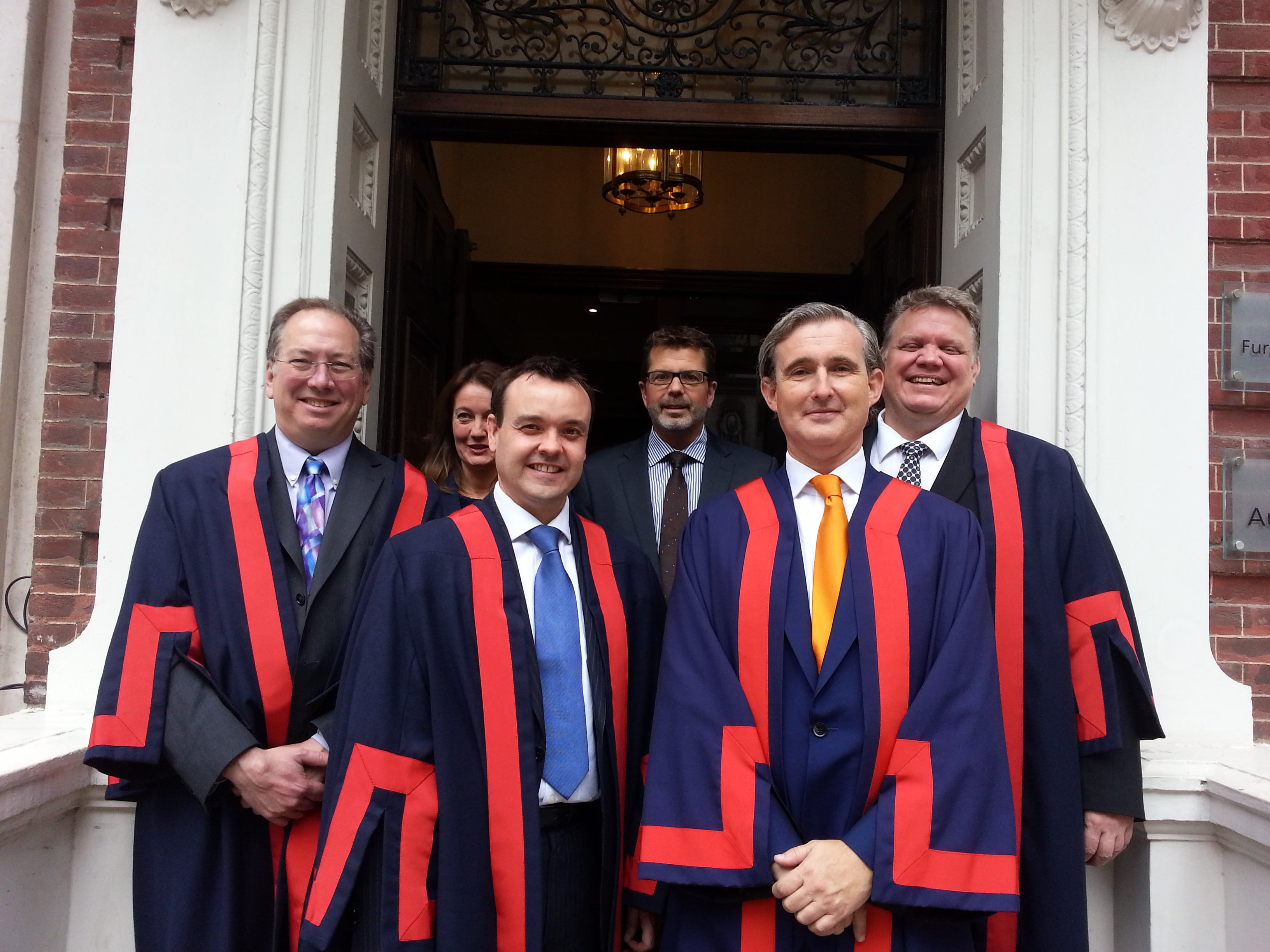
Today was one of the most delightful days for me.  The Furniture Makers made me, as their Alderman, an Honorary Liveryman.  It was a lovely ceremony done both in good taste and a speed just below haste and well above boring.  You can see the beaming faces of all the liverymen below.

20141002_124120

 The Furniture Makers are a more recent livery, though they achieved their Royal Charter last year after 50 years as a livery – http://www.furnituremkrs.co.uk/.  What makes them exciting is a wonderful combination of being an active trade, full of people with imagination and good taste.  For example, at their Royal Charter and 50th anniversary dinner they had goldfish (gold = 50th) in large martini-shaped glass bowls on the table.  The goldfish in front and above me seemed to perk up every time the photographer came by – “here’s my best side” – and went back to lazy swimming the moment he left.  The Furniture Makers took care that the goldfish were comfortable and went to good homes immediately afterwards.  Despite my earnest attempts at woodcarving, e.g.:

DSC06023they seem to like people who can shake hands without too many plasters, so I suspect they’ll been looking inward for the real talent.  I do hope to do many good things with them over the years to come and thank them for placing such confidence in my membership.

CISI Annual Integrity Debate 2014: Do UK Savers & Investors Get A Fair Deal?

One of the more difficult tasks can be substituting at the last moment in a debating team.  It happens more than you wish.  You haven’t worked on creating the question and always wish it was different.  The person for whom you’re substituting is often the one you’d  most dispute.  This year I was asked to help the CISI and debate the question  ‘Do UK savers and investors get a fair deal?’

Continue reading “CISI Annual Integrity Debate 2014: Do UK Savers & Investors Get A Fair Deal?”

The Disunited Kingdom Tour

The observant among you may have noticed that the Mainelli’s spent two weeks of August in Scotland, followed by Wales, and sailing in England.  We left in early August when polls for the Scottish Referendum predicted a 22 point “No” lead, and returned to England to hear about a predicted “Yes” lead.  Suspicious?  Go figure.

Mark Duff Globe 2

Of course, all I’ve learned about political diplomacy I’ve learned from Samuel Johnson, whose Scottish admirer and biographer, James Boswell, 9th Lord of Auchinleck, treasured and recorded such snippets as:

[Boswell:] “Mr. Johnson, I do indeed come from Scotland, but I cannot help it.”

[Johnson:] “That, Sir, I find, is what a very great many of your countrymen cannot help.”

[Johnson]: “In England we wouldn’t think of eating oats. We only feed them to Horses.”

[Boswell]: “Well, maybe that’s why in England you have better horses, and in Scotland we have better men.”

Feeling a bit sheepish about the fact that an entire nation seemed happy to never see our family again, I returned with my passport just before the referendum in order to save the nation.  Taking a wild chance I sailed the Clyde, along the way buying my dear friend, Eric Smith, a new red duster as a boat-warming gift for his Colvic Watson 28, Serendipity.  It also encouraged me.  Without a successful exertion on my part, the ensign might have had a mere few days of validity, so it’s good for me that the vote was for union, otherwise I would have been a bit sodium-chloride angry (salt-ire, or is that “sailor rage” or “sea rage”…) if it had been money/currency-union wasted.

20140914_154310

And a nice view of Arran Isle too!

Piering Ahead

One of the joys of restoring a Thames Sailing Barge, our beloved S B Lady Daphne, is racing her.  Racing her?  Indeed.  Thames Sailing Barge racing is the oldest continuous boat racing in the world and, despite the size, slow turns, and wide tacking angles, possibly the hardest in the world.  There is a full set of races each year off the east coast of England masterminded by the Sailing Barge Association.  On Sunday, 24 August, we were racing off Southend-on-Sea, passing by its famous pier, sometimes quite closely!

Southend-on-Sea 065 - edit

I have written a bit about this racing in the past:

And a lot more is contained on the Lady Daphne news area.  This year we managed to win the second place trophy in our class, but the privilege of racing continues to astound us.  And for those of you who know Southend, you’ll have to admit that it’s a special group of boats that can make the town look this pretty!

Southend-on-Sea 043 - edit

[photo courtesy of Mark Duff]

City Shuffles

The City of London is a fascinating study of two millennia of urban development.  I finished my first year on the Planning & Transportation Committee this month.  Inthe 1970’s I spent quite a bit of time working at the Harvard Graduate School of Design at Gund Hall, Harvard’s school of architecture.  My research job was providing architects with some of their first CAD-CAM 3D walk-throughs; today we’d call it computer generated imagery (CGI).  The architects used these very expensive, match-stick walk-throughs in competitions ‘selling’ architectural dreams.  So I should be an excellent ‘poacher turned gamekeeper’, no?  Also, like many, I’ve complained about much of the post-war architectural blight, the brutal brutalism, the feckless facades.  And of course, as a central London resident I’d like to improve the night view from my balconies:

London 032

Well, it’s harder than one thinks.  The planning applications are lengthy and complicated – these days there is a lot of CGI to look at.  Committee Members only get sent the small percentage of very tough applications, i.e. the political ones.  We rely on an excellent and committed Chairman who treats this unpaid post as a full-time job.

We’re cutting down on skyscrapers and hotels, but people’s complaints about them won’t cease for a few years till the planned ones are built.  Neighbours and financiers row with each other.  People complain, but then don’t bother to attend Committee meetings (meetings are open to the general public and can be fascinating to observe).  Central government plays politics with us over Smithfield Market, itself a very difficult decision.  St Bart’s Hospital and Maggie’s Centre for cancer lead to huge divisions of opinion.  Yes, very interesting times in a single year.

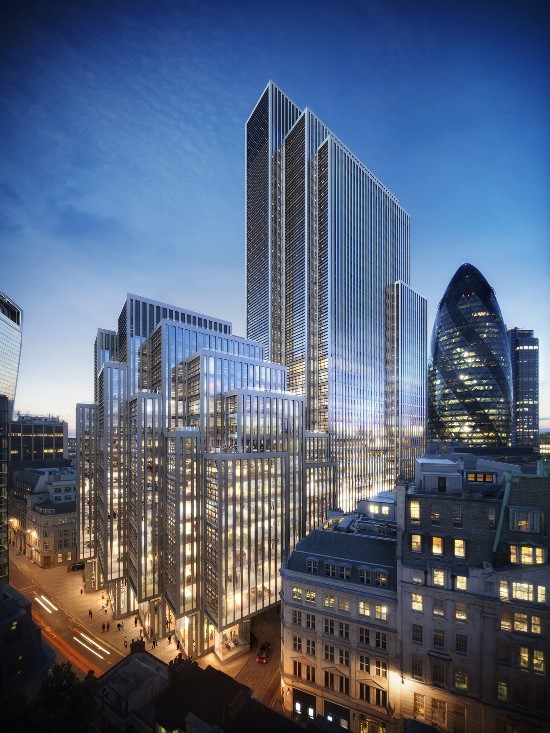
And my favourite, though tough, decision in my first year?  Probably 40 Leadenhall, which I have privately nicknamed “The Shuffle” because it looks to me like a deck of cards.  I do hope when built it looks as good as the CGI and does provide a unique blend of traditional architecture and modern, with innovative internal open spaces.  I really do.  That’s the tough bit of planning, the need for hope – we’ll get it right this time…

40Leadenhall

Never Never Land

For over two decades my great sailing buddy Axel has gone on and on about Helgoland, sometimes rendered in English as Heligoland.  The wonderful sail, the interesting tides, the fantastic island, the duty free.  But for those two decades and more, the weather isn’t quite right, the tides don’t favour us, or Kieler Woche calls.  I long ago started calling it “Never Never Land”.  But J M Barrie might be proud of this shot finally approaching the island – “Second star to the right and straight on ’til morning. ”

20140626_210850

Helgoland is a small German archipelago in the North Sea. Formerly Danish and British possessions, the islands are located in the Heligoland Bight in the south-eastern corner of the North Sea. They are the only German islands not in the immediate vicinity of the mainland and are approximately three hours’ sailing time from Cuxhaven at the mouth of the River Elbe. In addition to German, the local population, who are ethnic Frisians, speak the Helgolandic dialect of the North Frisian language called Halunder. Helgoland was formerly called Heyligeland, or “holy land”, possibly due to the island’s long association with the god Forseti.

The long accretion of fortifications is well worth the visit alone – tunnels, submarine bases.  There is also extensive wildlife with seals so calm around humans that they just sit and stare at you.

20140627_174915

At the end of the 18th century, the English supported Helgoland smuggling when such activities harrassed Napoleon.  After England took proper possession in 1807, much of the population perished of starvation as the English stamped on smugglers.  In 1890, Helgoland was swapped with Germany for Zanzibar.  Then in 1945, the English took possession again, deporting all the islanders.  From 1945 to 1952 the uninhabited Heligoland islands were used as a bombing range. On 18 April 1947, the Royal Navy detonated 6,700 tonnes of explosives (“Big Bang” or “British Bang”), creating one of the biggest single non-nuclear detonations in history.  The blow shook the main island several miles down to its base, changing its shape (the Mittelland was created).  Possibly due to this history, during my visit,I seem to have forgotten to mention I was visiting from London.  It was a magical island and the people were most hospitable, though not worth the wait.  We should have also gone twenty years ago.

220px-Flag_of_Helgoland.svg

This rhyme about their flag is well-known in Germany:

German Low German North Frisian English
Grün ist das Land,
rot ist die Kant,
weiß ist der Sand,
das sind die Farben von Helgoland.
Gröön is dat Land,
rood is de Kant,
witt is de Sand,
dat sünd de Farven van’t Helgoland.
Grön es det Lunn,
road es de Kant,
witt es de Sunn,
det sen de Farven van’t Hillige Lunn.
Green is the land,
Red is the cliff,
1 
White is the sand,
These are the colours of Heligoland.
1 lit. “edge” or “coast” 

Banking About In Boats

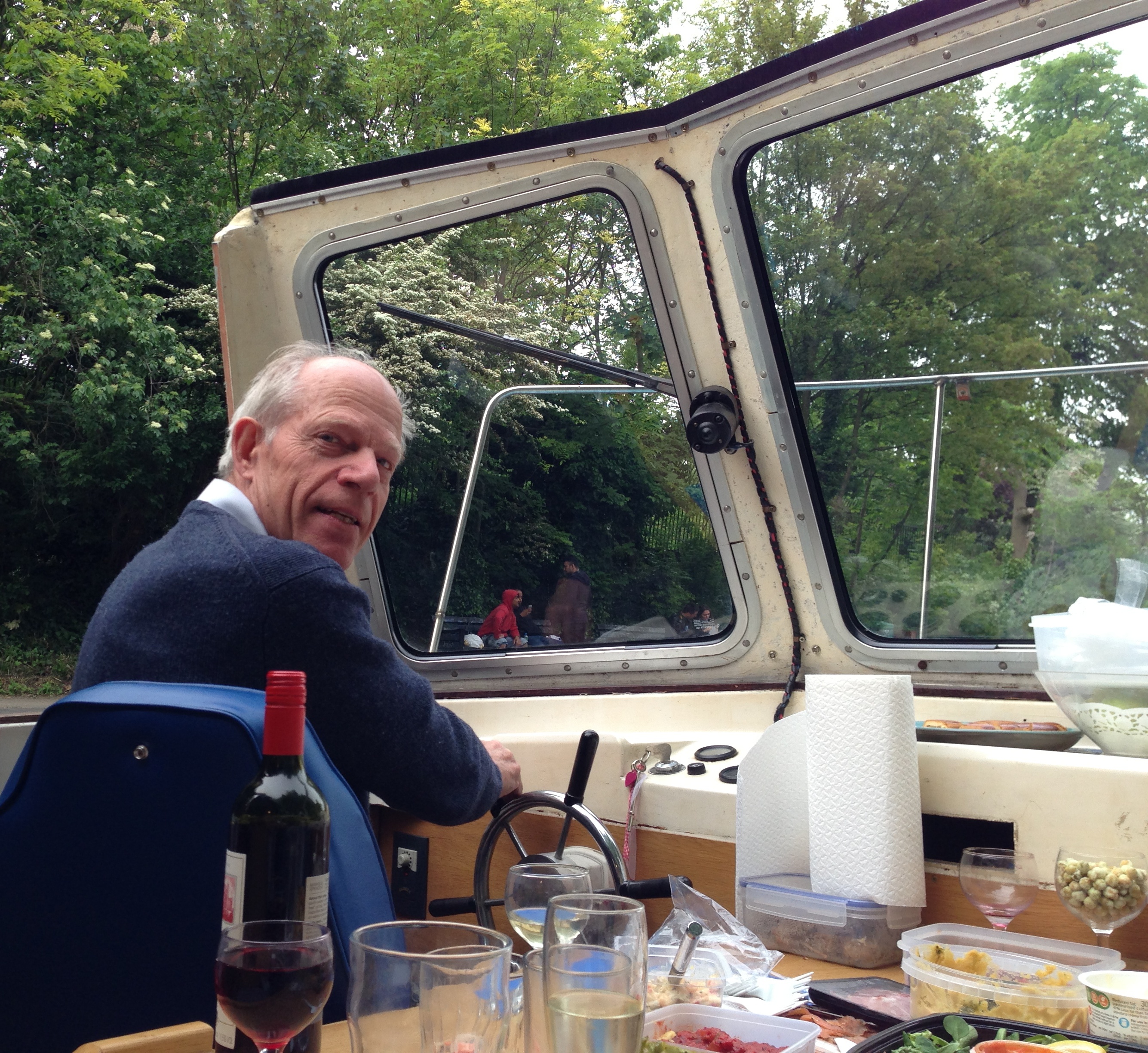
Kathleen Tyson-Quah is a generous friend letting us bounce around the Regents Canal with her several times on her assortment of river craft.  Literally bouncing off the banks on a few occasions.  We had just had some fun at the 2014 Canalway Cavalcade London in Paddington Basin when Kathleen let David Shirreff take the wheel of her new possession, Diona. 

2014-05-05 18.09.46 edit

David knows a lot about banks as a former Economist writer.  His new book “Don’t Start from Here: We Need a Banking Revolution” comes out in September.  BTW – he means financial banks not river banks.  And no, despite the drink on view, not a single scratch!

Not So Foolish April

April turned out to be a whirlwind month rather than a showery one.  The month opened with a not-April-fool article in Banking Technology, co-written with my friend Bob McDowall and published promptly courtesy of my friend, editor David Bannister.  This article set the tone for a whole series of meetings and initiatives around blockchain technologies.

Building Bit – What’s A Poor Government To Do About AltCoins? Michael Mainelli and Bob McDowall 2014
Banking Technology, Informa plc (April 2014), pages 30-33.

Equally interesting though have been the numerous reactions to Z/Yen’s publication of Global FInancial Centres Index 15 showing London pipped for the top spot by New York City.

The Global Financial Centres Index 15 Mark Yeandle and others 2014
Long Finance & Qatar Financial Centre Authority (March 2014), 58 pages.

Nobody volunteered to write the foreword, so sadly I had to pen the following:

“London’s powerful wholesale financial markets, which leverage its strong brand, generate disproportionate benefits in jobs and exports.  London suffers when global financial news tarnishes that brand – London-IBOR, the London Whale, the foreign exchange scandal only now starting to bite, with rumours circulating about other index, benchmark, and commodities scandals. In fact, it seems increasingly apparent that authorities were aware of, yet tolerated, the LIBOR scandal well into 2012. If the regulators are unimpressive, they are certainly not inexpensive. Some claim that the majority of jobs created have been in compliance departments or compliance providers, accountants or actuaries or lawyers. A Middle Eastern businessman states the problem plainly, “though deals have become vastly more expensive, I don’t feel any safer.” “

It probably doesn’t get more encouraging to read a related snippet from IFC Economic Report which made it into our Gresham Symposium, “Saving Havens: Off Shore, Onshore, Midshore: International Financial Centres“:

“From January to June 2013, the UK media had headlines such as “Google, Amazon, Starbucks: The rise of ‘tax shaming’” (BBC), and “David Cameron: Tax avoiding foreign firms like Starbucks and Amazon lack ‘moral scruples’” (The Telegraph).  In late June 2013, Starbucks agreed to pay £10 million to the UK Treasury.  Given that Starbucks reportedly paid no tax in the previous four years, £8.6m in corporation tax in the UK over the previous 14 years, yet had sales in the UK of £400m per annum, this might sound like a victory over tax evasion.

At no point has any authority accused Starbucks of not complying with tax law.  Having followed the tax code correctly, Starbucks reached annual agreements with HM Revenue & Customs that little or no corporation tax was payable.  The majority of people seem to have no problem with Starbucks’ payment or feel an urgent need to reform tax laws.  However, as an accountant I wonder how the payment should be booked.  Certainly not to marketing or advertising expenses?  Possibly to tax?  Tax liabilities have always been a complicated area, but in this case is the payment:

  • a mistake, an adjustment to historic tax liabilities, or a retroactive tax?
  • a bonus payment or donation to HM Revenue & Customs?
  • a donation or bribe paid to the UK coalition government, or perhaps David Cameron’s Conservative Party?
  • a shakedown or protection racket payment to a corrupt government?

Perhaps I might mischievously suggest that Starbucks be reported to the US authorities under The Foreign Corrupt Practices Act of 1977 which “was enacted for the purpose of making it unlawful for certain classes of persons and entities to make payments to foreign government officials to assist in obtaining or retaining business.” [US Department of Justice website]  The rules on international corporate taxation are close to unworkable, though I wonder why more people do not question the theoretical basis for taxing corporations, which is at best dubious.” 

Socially, April was much more upbeat.  There was the whirlwind contrast of greeting the President of Ireland, Michael Higgins, and the Taoiseach, Enda Kenny, at Mansion House and Guildhall, with the celebrations of St George’s Day.  It was quite emotional hearing the Irish National Anthem, “Amhrán na bhFiann”, being played in the Guildhall in honour on the evening of 9 April.  Something I never expected to hear three decades ago, yet also a sound that still discomfits those who lost loved ones during the Troubles.  The Lord Mayor’s excellent speech on the night says it all.  

Increasingly emotional too were this year’s celebrations in honour of St George’s Day, 23 April.  Three decades ago it was not a day one heard much about.  Today, there isn’t a patriotic pub not festooned with flags.  I attended two notable events.  Courtesy of Dudley Edmunds, I was able to hear a wonderful talk from the last of the dambusters, Johnny Johnson.  Bright as a button and with a deft touch to his talk, Johnny made you realise what a group of determined young men could achieve, and still retain their humanity, as he related the story of 617 Squadron’s May 1943 raid.
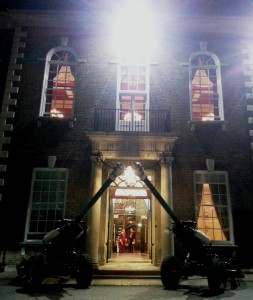
 HAC

The second event was the St George’s Dinner at the Honorable Artillery Company which I attended for the first time in an ex officio Aldermanic capacity in Old Bailey velvets.  The female officer toasting the guests reminded the guest of honour, the US ambassador, that the Company and the USA had had some low and high points in their relationship, such as burning the White House in 1814, though she left us a bit misdirected about high and low.  We concluded the dinner with three rounds singing Rule Brittania, Land of Hope and Glory, and Jerusalem along with the band and accompanied by the American ambassador, which wound up with us standing on the tables in formal wear and waving our napkins.  The photo above was taken as I left about midnight, outsung and outdrunk by men and women who’d entered military service in the 1940’s and 1950’s.