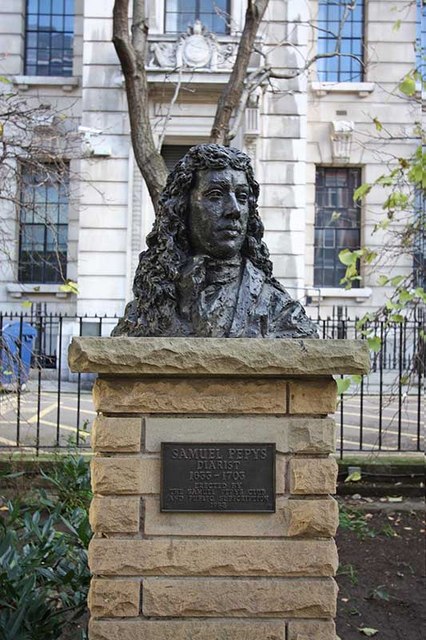

Pepys Day has turned out to be quite the fun occasion. For a third time (see Pepys Day! Part Deux & Pepys Day! Part Deux) we have had a wonderful celebration of the City of London and its most famous chronicler.
City AM was an enormous help at publicising “If Dublin can have Bloomsday, London should celebrate Pepys Day“. A few hundred people turned to watch Pepys opening the gates at Temple Bar and listen to excerpts from his diary. Over 150 people took Pepys walks with the City of London Guides & Lecturers Association (proud vice-Patron that I am).
The most significant sign of success? We’re having another! Friday, 3 September 2027, 10:45 at Temple Bar and walks round the City from St Paul’s Visitor Centre at 12:00.
At the celebratory dinner in Temple Bar – yes, as Pepys would have it with venison pies and parmesan – I made the following remarks to:
Pepys Day
And here we are, marking this extraordinary week in September 1666, when the Great Fire consumed much of the City — and Samuel Pepys (1630-1703) watched, worried, recorded, and occasionally fled, leaving his Parmesan behind.
What a magnificent location to be consuming tonight’s dinner. Funnily enough, in 2007 my firm won the contract to install the computer systems for the City of London Information Centre around the corner. Delicious trivia? What’s the most frequently asked question over nearly 20 years? “Where is St Paul’s?”
A more important question for us tonight is – why should we commemorate Pepys? Simple really – because of the very personal way he recorded a turbulent but rambunctious decade: the Restoration of Charles II in 1660, the Great Plague of 1665, the Great Fire of 1666, and the Second Anglo-Dutch War ending in 1667. Perhaps it was better as just ten years – as Steve Wright quipped – “I kept a diary right after I was born: Day 1: Tired from the move. Day 2: Everyone thinks I’m an idiot.”
Pepys’s diary was as racy as the times. He was certainly no saint. He was vain, ambitious, curious, frequently hungry, lecherous – Pepys really was a peeper – and very, very human. That is precisely why, 360 years later, we still recognise him.
Let me offer three reasons why Pepys deserves our attention.
First, Pepys helped modernise the Royal Navy.
He arrived at the Navy Board knowing little about ships, but possessing something more useful: an accountant’s eye. He brought greater discipline to supplies, administration, and standards. He fought defence procurement corruption. In 1677 he introduced examinations for naval lieutenants, including mathematics and navigation.
He helped transform naval command from: “I have always desired to be a captain,” to: “Are you qualified to be a captain — and will you be more dangerous to our enemies, or to us?”
Second, Pepys was deeply involved in the Scientific Revolution.
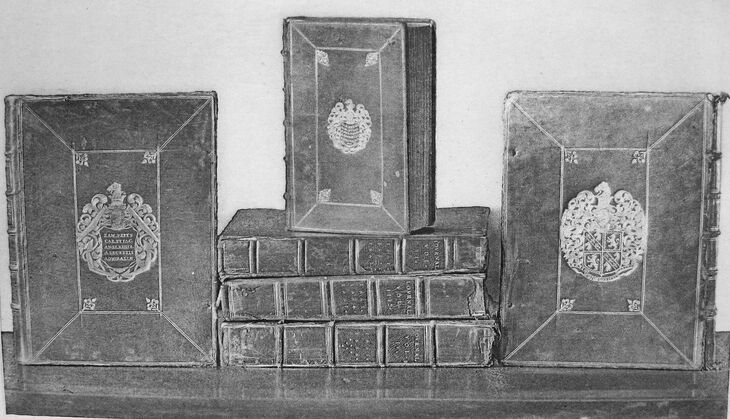
He was President of the Royal Society from 1684 to 1686 — at a remarkable moment in the emergence of modern science. He was close to Robert Hooke and Christopher Wren. And during his presidency, Isaac Newton published the Principia Mathematica, one of the foundational works of modern science. Indeed, the title page carries Pepys’s name as President.
So the great diarist was not merely recording Restoration London — its plague, fire, politics, sex, food, and song. He was sitting in the engine room of the Scientific Revolution.
Third, Pepys knew this neighbourhood extremely well.
Over nine years of the diary he mentions this area, Temple Bar, some 19 times. The fire petered out before Temple Bar; so Temple Bar survived the fire, but Wren rebuilt it anyway as part of the general improvement works between 1669 and 1672. Sadly Pepys ceased writing his diary in 1669 so we don’t know what he felt about the new building, but as a close friend of Wren he probably approved heartily.
He passed through here between Westminster, the Temple, and Fleet Street, buying books, peacock feathers, and gold; watching hangings, pillories, severed heads, and beatings; attending to naval business; meeting people such as Wren and William Penn — and, naturally, retiring to taverns such as the Mitre, the Sun and the Crown for wine and conversation.
That combination of public affairs, private gossip and refreshments seems to me an excellent definition of London – even better than coffee houses.
Here is Pepys on 30 November 1668:
“To White Hall, and there did some business, and so home. In my way, at Temple Bar, I met with Mr. Wren, and he and I to a tavern, where we drank a glass of wine and discussed the Duke of York’s affairs.”
There is something wonderfully London about that. Diaries are special. A diary is the only place where you can complain about your life to someone who literally can’t walk away.
Pepys discomforting candour gives historians something extraordinary: an event unfolding at street level, in real time, through the eyes of an intelligent, connected, frightened, curious, and occasionally self-interested Londoner. Pepys and his diary are a celebration of our City’s ability to survive catastrophe, adapt and rebuild. The Great Fire changed the physical City. Pepys helps us understand the transformation of the human City.
And perhaps that is the greatest lesson of Pepys: we are the better for seeing both his, and our, virtues – and his, and our, flaws as we learn to live life fully.
The first Pepys Day, in 2024, began as a Lord Mayor’s fancy and attracted about 225 people. Last year, that doubled to around 500. Today, I counted more than 200 here at Temple Bar, with another 150 or so joining the walk. Dublin began Bloomsday in 1954, celebrating one fictional day in the life of James Joyce’s Leopold Bloom. It now attracts tens of thousands. We are clearly going to need a bigger Pepys.
It would be difficult for me to express unemotionally how much this third Pepys Day has meant to me — and how grateful I am to everyone who has made it possible.
To the Worshipful Company of Architects, our hosts tonight; the Pikemen & Musketeers of the Honourable Artillery Company; the City of London Guides; City AM; our photographer and press liaison Andy Sillett; the City of London Corporation’s Destination City team and its financial support; the team here at Temple Bar; the Visitor’s Centre team; and all the Masters, Livery Companies, guides, walkers, volunteers and supporters who have turned up today – and of course Mr Pepys himself being channeled so ably today by Andrew Ashmore — thank you.
Dublin celebrates the immortal memory of Joyce. Edinburgh and Glasgow celebrate the immortal memory of Burns. London celebrates the immortal memory of Dickens.
But there is only one place in the world that can truly celebrate the immortal memory of Samuel Pepys. And, fortunately, it is right here, the City of London.
So may I ask you all to rise and join me in a toast: To the Immortal Memory of Samuel Pepys. To Pepys!
Thank you.
References To Temple Bar
November 23, 1660
“In the afternoon I to the Temple, where I found my Lord’s picture drawn by Wright, but wait till it be done. So back again home, and in Fleet Street bought a peacock’s feather for my wife, and so home. At night to the Mitre, where we were very merry, and so home. In my way from the Temple to Temple Bar I saw a man, a plumber, carrying a heavy piece of lead on his head, who, coming to a post, fell down dead, which put me into a great fright.”
December 20, 1660
“Thence to the Temple, and so to Fleet Street, where at Mr. Beauchamp’s, the goldsmith, I took up my plate, and so home. In my way I saw a great multitude of people at Temple Bar, and, inquiring what the matter was, they told me that a man was hanged there for stealing of a horse; which I was sorry to see, but could not help.”
January 25, 1660/1
“Thence I to the Temple, where I stayed writing of letters, and so to Fleet Street, where I bought a few books, and so home. In my way I saw a great crowd of people at Temple Bar, and, asking what the matter was, they told me that a man was hanged there for stealing a silver tankard.”
May 26, 1661
“Sir W. Batten and I in his coach to White Hall, where I went to the Chapel, and heard a good sermon by a stranger. Thence to Sir G. Carteret’s, where I dined with him and his lady and family… After dinner Sir W. Batten and I to the Temple, and so home. In our way, at Temple Bar, we met with a great stop of coaches, which held us half an hour, which was very troublesome.”
November 12, 1661
“My wife and I by coach to the Temple, and there I left her, and I to White Hall to the Privy Seal, and so back again to the Temple, where I found my wife, and so home. In our way, at Temple Bar, we saw the head of Sir Henry Vane set up upon a pole, which was a very doleful sight to me.”
July 1, 1663
“This morning I went by water to Westminster Hall, where I spoke with several people, and so to the Temple, where I spent two or three hours… Thence home, and in my way, at Temple Bar, I bought a couple of books of Mr. Playford, and so home to dinner.”
October 26, 1663
“Thence to the Temple, and so to Fleet Street, where I bought a few things, and so home. In my way, at Temple Bar, I saw a great crowd of people gathered together, and asking what the matter was, they told me that a man was set in the pillory for printing a seditious pamphlet, and the people threw eggs and dirt at him.”
January 18, 1664/5
“To the Temple, and there spoken with Mr. Hales about my picture, and so home. In my way, at Temple Bar, I met with Mr. Creed, and he and I to the Mitre Tavern, where we drank a glass of wine and talked about our navy business.”
February 15, 1664/5
“Thence to the Temple, and so home. In my way, at Temple Bar, I saw a great many people gathered together to see the King’s guards ride by, which was a very fine sight, they being very well mounted and accoutred.”
March 8, 1665/6
“To the Temple, and there did some business, and so home. In my way, at Temple Bar, I met with Sir W. Batten, and he and I to the Sun Tavern, where we drank a bottle of wine and talked about our office affairs.”
September 5, 1666
“I walked into the town, and found Fenchurch Street, Gracious Street, and Lombard Street quietly burned. So I on to the Exchange, and there saw people walking up and down in a sad distracted manner… I walked as far as Temple Bar, and there found the fire was stopped, which was a great mercy.”
March 24, 1666/7
“To White Hall, where I stayed all the morning, and heard a sermon in the Chapel. Thence home, and in my way, at Temple Bar, I met with Mr. Pepys, my cousin, and he and I to the Rose Tavern, where we dined together and were very merry.”
May 20, 1667
“Thence to the Temple, and so to Fleet Street, where I bought a few books, and so home. In my way, at Temple Bar, I saw a great stop of coaches, which held me near an hour, and made me very angry.”
September 2, 1667
“To the Temple, and there did some business, and so home. In my way, at Temple Bar, I met with Mr. Creed, and he and I to a tavern, where we drank a glass of wine and talked about the late great fire, it being just a year since it began.”
December 20, 1667
“Thence to the Temple, and so home. In my way, at Temple Bar, I saw the heads of several of the late regicides set up upon poles, which was a very ghastly sight.”
February 10, 1667/8
“To the Temple, and there spoke with Mr. Hales, and so home. In my way, at Temple Bar, I met with Sir W. Penn, and he and I to the Crown Tavern, where we drank a pint of wine and talked about our navy business.”
April 15, 1668
“Thence to the Temple, and so to Fleet Street, where I bought a few things for my wife, and so home. In my way, at Temple Bar, I saw a great crowd of people, and inquiring what the matter was, they told me that a man was caught picking pockets, and the people were beating him very severely.”
November 30, 1668
“To White Hall, and there did some business, and so home. In my way, at Temple Bar, I met with Mr. Wren, and he and I to a tavern, where we drank a glass of wine and discussed the Duke of York’s affairs.”
March 12, 1668/9
“Thence to the Temple, and so home. In my way, at Temple Bar, I saw a great stop of coaches, which held me a long time, so that I was late home to dinner.”
Biblically?
- Samuel Pepys’s Diary: Contains approximately 1.25 to 1.28 million words across its complete 11-volume The Diary of Samuel Pepys span from 1660 to 1669. [1, 2, 3]
- The Bible (King James Version): Contains roughly 780,000 to 790,000 words (depending on how verse numbers and introductory matter are counted). [1]
- Pepys’s Diary is about 1.5 times longer than a standard Protestant Bible.